
Dances performed in India are said to have their origins in dances and rituals of the period of the Vedas, which date back to around 1000 B.C. The earliest Indian religious texts describe creation in terms of dance. In Hindu mythology, a dance by Shiva creates and destroys the universe. It is the the History that comes accross it through this.
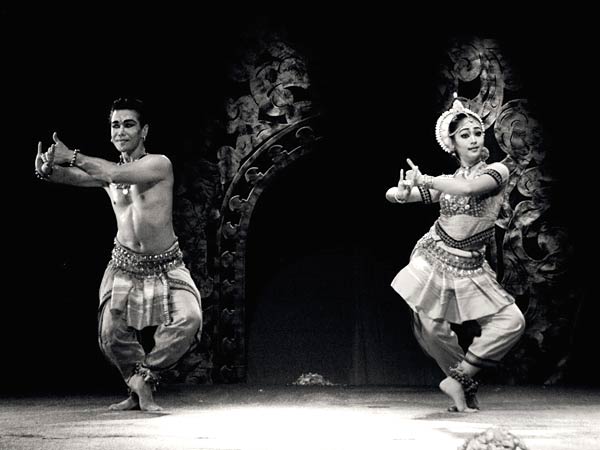
History of Indian dance form can be traced to pre Vedic period i.e. Indus Valley Civilization. It is revealed from a dancing figurine found in the course of excavations at Mohan Jodaro and Harappa, that dance had important place in the social life of the people of those times and they were quite well versed in this art.
Indian people had knowledge of music and dance even during 5000-6000 BC, which is acknowledged by famous historian Fedis also.
The art of dance as practised by Dravids was also of high order and from their life we learn of richness of ‘homogeneity’, ‘vision’ and ‘beauty of innerself’. Dravid women were proficient in dancing and beautiful.
Dance in India comprises numerous styles of dances, generally classified as classical or folk.[1] As with other aspects of Indian culture, different forms of dances originated in different parts of India, developed according to the local traditions and also imbibed elements from other parts of the country.[2]
Sangeet Natya Academy, the national academy for performing arts in India, recognizes eight traditional dances as Indian classical dances,[3] while other sources and scholars recognize more.[4][5] These have roots in the Sanskrit text Natya Shastra,[1] and the religious performance arts of Hinduism.[6][7][8]

Mohiniyattam at Kannur district school kalothsavam 2019
Folk dances are numerous in number and style and vary according to the local tradition of the respective state, ethnic or geographic regions. Contemporary dances include refined and experimental fusions of classical, folk and Western forms. Dancing traditions of India have influence not only over the dances in the whole of South Asia, but on the dancing forms of South East Asia as well. Dances in Indian films, like Bollywood Dance for Hindi films, are often noted for freeform expression of dance and hold a significant presence in popular culture of the Indian subcontinent.[9]