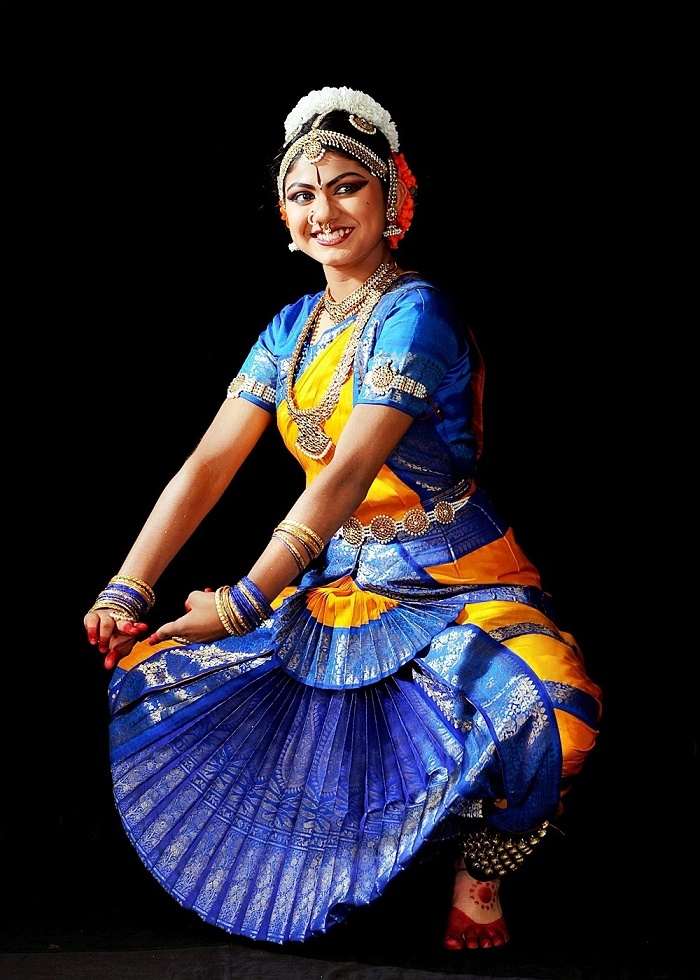
Bharatanatyam, a pre-eminent Indian classical dance form presumably the oldest classical dance heritage of India is regarded as mother of many other Indian classical dance forms. Conventionally a solo dance performed only by women, it initiated in the Hindu temples of Tamil Nadu and eventually flourished in South India. Theoretical base of this form traces back to ‘Natya Shastra’, the ancient Sanskrit Hindu text on the performing arts. A form of illustrative anecdote of Hindu religious themes and spiritual ideas emoted by dancer with excellent footwork and impressive gestures its performance repertoire includes nrita, nritya and natya. Accompanists include a singer, music and particularly the guru who directs and conducts the performance. It also continues to inspire several art forms including paintings and sculptures starting from the spectacular 6th to 9th century CE temple sculptures.
Bharatanatyam In Tamil Nadu
A description of Bharatanatyam from the 2nd century CE can be found in the ancient Tamil epic Silappatikaram, while temple sculptures of the 6th to 9th century CE suggest it was a highly refined performance art by the mid-1st millennium CE.[6][7] Bharatanatyam is the oldest classical dance tradition in India.[8] Bharatanatyam is the state dance form of Tamil Nadu.
Bharatanatyam contains different types of baanis. Baani, or ‘tradition’, is a Tamil term used to describe the dance technique and style specific to a guru or school. These are named according to the village of the guru (with the exception of some baanis[citation needed]. Bharatanatyam style is noted for its fixed upper torso, bent legs and knees flexed (Arai mandi) combined with spectacular footwork, and a sophisticated vocabulary of sign language based on gestures of hands, eyes, and face muscles.[7] The dance is accompanied by music and a singer, and typically the dancer’s guru is present as the Nattuvanar, director, and conductor of the performance and art. The performance repertoire of Bharatanatyam, like other classical dances, includes nrita (pure dance), nritya (solo expressive dance) and natya (group dramatic dance).[9][10]Gallery- Get Grooving (upgradcampustest.xyz)